From the Midwest to Jerusalem: American Pilgrims on the Journey That Changed Everything
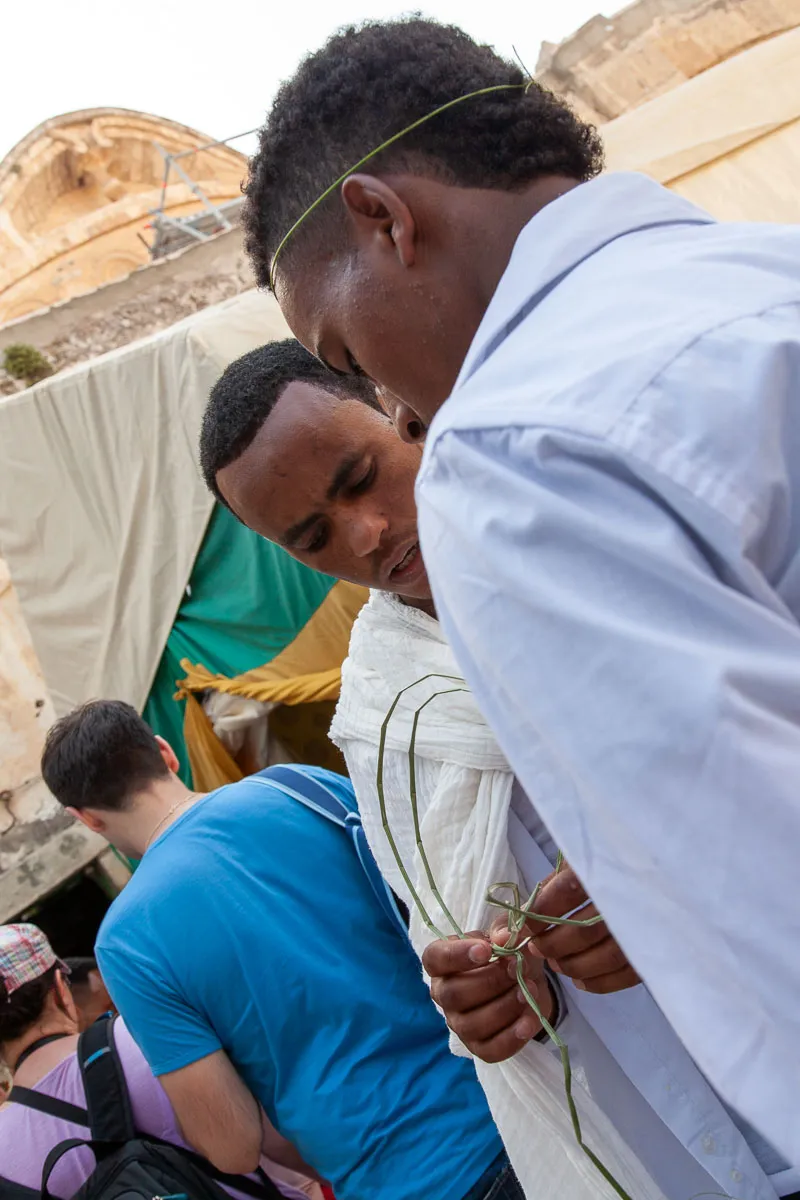
Photo: American Christian pilgrims praying Jerusalem holy site group travel, via paulpope.co.uk
Susan Hartley had attended the same Baptist church in Columbus, Ohio, for thirty-seven years. She had taught Sunday school, led women's Bible studies, and read the Passion narrative aloud every Easter Sunday until she knew it nearly by heart. She thought she understood, as well as any person could, what the Church of the Holy Sepulchre represented. Then she walked through its doors.
"I completely fell apart," she says quietly, describing the moment she touched the Stone of Anointing — the slab of rock near the entrance where, according to tradition, the body of Jesus was prepared for burial. "I didn't expect that. I'm not an emotional person. But something happened to me in that room that I still don't have words for."
Susan's experience is far from unusual. Scholars of religious tourism estimate that between 600,000 and 800,000 American visitors travel to Israel annually, and the Church of the Holy Sepulchre consistently ranks among the most visited sites. What draws them there, and what they carry home, reveals something profound about the intersection of faith, history, and the irreplaceable power of physical presence.
The Pull of the Place
For many American Christians, the decision to visit the Church of the Holy Sepulchre begins not with a travel agent but with a moment of spiritual longing. Marcus Webb, a Methodist pastor from Nashville, Tennessee, spent twenty years preaching about Jerusalem before he finally booked a flight.
"There's a particular kind of cognitive dissonance that comes from teaching something your whole life that you've never actually seen," he explains. "I could describe the Garden of Gethsemane, the Via Dolorosa, the tomb — but I was describing places I'd only read about. I needed to stand in them."
This desire to inhabit the biblical narrative, rather than simply study it, is a recurring theme among American pilgrims. In a culture that increasingly values experiential engagement over abstract knowledge, the appeal of walking the same stones that appear in scripture carries enormous weight. For evangelical Christians in particular, the Holy Land represents a kind of three-dimensional Bible — a living confirmation of the text they hold sacred.
Catholic and Orthodox pilgrims often approach the journey with an additional layer of liturgical expectation. For them, the Church of the Holy Sepulchre is not merely a historical site but an active sacred space — a place where sacraments have been administered, prayers offered, and divine grace sought continuously for seventeen centuries. Diane Kowalski, a Polish-American Catholic from Chicago, made the pilgrimage as part of a parish group led by her priest.
"We celebrated Mass inside the church," she recalls. "In the chapel right there, steps from the tomb. I have received Communion thousands of times in my life, but that morning was unlike any other. The veil between the ordinary and the sacred felt very thin."
Planning the Journey: Practical Realities for American Visitors
For those considering a pilgrimage, it is worth understanding that the Church of the Holy Sepulchre rewards preparation. The site is jointly administered by six Christian denominations — the Greek Orthodox, Roman Catholic (Franciscan), Armenian Apostolic, Coptic, Ethiopian Orthodox, and Syriac Orthodox churches — each with its own liturgical calendar and schedule of services. Visiting during a major Christian feast day, such as Holy Saturday or Easter, offers an extraordinary experience but also brings enormous crowds.
Most American pilgrims arrive as part of organized tour groups, often arranged through their home churches or through specialized religious travel companies. These groups typically follow an itinerary that moves through the Old City of Jerusalem along the Via Dolorosa — the traditional route of Christ's final journey — before arriving at the church. Walking this path, even in the company of dozens of other tourists, provides a physical and emotional context that shapes the encounter with the church itself.
Independent travelers should note that the church is open daily, with hours that vary by season, and that the line to enter the Edicule — the shrine encasing the tomb — can extend for several hours during peak periods. Many experienced pilgrims recommend arriving early in the morning, before the crowds gather, to allow for quieter reflection. The church's interior is vast and complex, with numerous chapels, galleries, and sacred sites beyond the Edicule, and a knowledgeable guide can make an enormous difference in navigating and understanding what one is seeing.
The Moment of Arrival
Nearly every pilgrim interviewed for this article described a version of the same experience: an unexpected emotional response upon arriving at the church's threshold or entering its most sacred spaces. The reactions vary — some weep openly, others feel a sudden, inexplicable calm, and still others describe a sense of disorientation, as though the weight of the place temporarily displaced their ordinary sense of self.
Robert Sánchez, a retired schoolteacher from San Antonio, Texas, had been a practicing Catholic his entire life but describes himself as someone who had "always kept faith at a certain intellectual distance." He traveled to Jerusalem with his wife to celebrate their fortieth wedding anniversary.
"When I knelt inside the Edicule," he says, "I had about thirty seconds before the attendant gestured for me to move along — the line behind me was long. But in those thirty seconds, I felt something I can only describe as presence. Not emotion. Presence. I'm still not entirely sure what to make of it, but I know it was real."
This language of presence — an encounter with something beyond the merely historical — surfaces repeatedly in conversations with American pilgrims. It is worth noting that such experiences are not exclusive to any single denomination. Evangelical Protestants who might otherwise be skeptical of pilgrimage traditions report similar moments of unexpected spiritual intensity.
What Pilgrims Bring Home
The transformation described by many American visitors to the Church of the Holy Sepulchre is not always dramatic or immediate. For some, the change is subtle — a deepened capacity to engage with scripture, a renewed commitment to prayer, or simply a more vivid mental image that enriches their worship for years afterward.
Susan Hartley, who wept at the Stone of Anointing, returned to Columbus and found that her Sunday school teaching had been permanently altered.
"I used to teach the Resurrection as a theological proposition," she says. "Now I teach it as a place. As something that happened in a specific room, in a specific city, on a specific morning. That makes all the difference."
Marcus Webb, the Nashville pastor, brought back something more communal. Within a year of his return, he had organized two parish pilgrimages, taking members of his congregation to Jerusalem so that they, too, could stand where he had stood.
"A pilgrimage is not a vacation," he says. "It's an act of the whole self — body, mind, and spirit. The Church of the Holy Sepulchre asks something of you. And what it gives in return is something you cannot receive any other way."
For those who have not yet made the journey, these voices offer both invitation and preparation. The church will be there, ancient and enduring, its stones worn smooth by millions of hands across two thousand years. The only question is when you will add your own.