What the Walls Remember: Archaeological Discoveries Rewriting History Inside the Church of the Holy Sepulchre
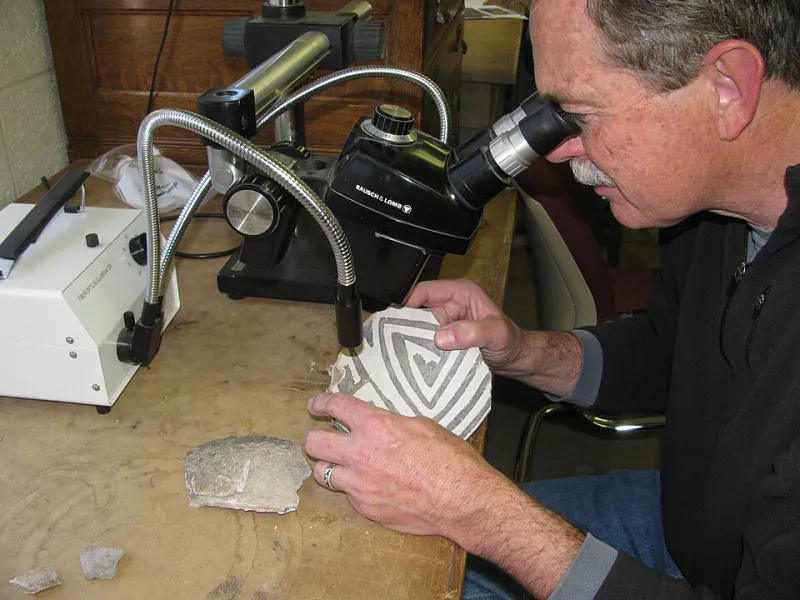
Photo: NPS Photo, Public domain, via Wikimedia Commons
Beneath the worn flagstones and ancient masonry of the Church of the Holy Sepulchre, centuries of history lie waiting to be read. Recent archaeological investigations—conducted with extraordinary care so as not to disturb one of Christianity's most venerated sites—are yielding discoveries that illuminate first-century Jerusalem, the earliest practices of Christian worship, and the remarkable continuity of sacred memory across two thousand years.
For the curious American reader accustomed to thinking of archaeology as something that happens in desert trenches far removed from living communities, the work being done inside this functioning church presents a genuinely unusual proposition: science and sanctity operating, with considerable delicacy, in the same space.
A Church Built on Centuries
To appreciate what archaeologists are uncovering, it helps to understand what they are working within. The Church of the Holy Sepulchre as it stands today is not a single structure but an accumulation of structures—a palimpsest of stone in which the architectural decisions of the fourth century, the Crusader period, the Ottoman era, and the modern age are all legible to a trained eye.
The church's origins trace to the reign of the Roman Emperor Constantine, who in the early fourth century ordered the construction of a monumental complex over the site that local Christians identified as the location of the Crucifixion and the tomb of Jesus. To build it, Roman engineers demolished a pagan temple that had itself been constructed over the site roughly two centuries earlier—a detail that would prove archaeologically significant.
Beneath Constantine's church lies the geological and historical record of first-century Jerusalem. And it is into that record that modern researchers are carefully reaching.
The Tomb Restoration and What It Revealed
In 2016 and 2017, a major restoration of the Edicule—the ornate shrine built over the tomb traditionally identified as that of Jesus—provided archaeologists with a rare opportunity. When the marble cladding of the tomb enclosure was removed for the first time in centuries, researchers from the National Technical University of Athens were able to examine the original burial surface beneath.
What they found was significant. A layer of fill material was discovered between the original limestone surface and the marble slab placed over it, likely dating to the Crusader period. Beneath that, the tomb's original rock surface was identified and documented. Mortar samples taken from the site were subjected to optically stimulated luminescence dating, a technique that determines when sediment was last exposed to light. The results suggested the original surface had last been exposed in the mid-fourth century—consistent with the Constantinian construction.
For archaeologists, this provided a meaningful data point: the tradition linking this site to the burial of Jesus is not a medieval invention but appears to have been maintained with physical continuity from at least the early Christian era.
Reading the Quarry Beneath the Church
One of the most compelling recent discoveries involves the geological substrate of the site itself. Investigations beneath the church have revealed evidence of an ancient quarry that was in use during the Iron Age and subsequently fell out of use well before the first century. Quarries that had been exhausted were commonly used as burial grounds in ancient Jewish practice—a detail that aligns precisely with the Gospel accounts of Jesus being buried in a tomb located near a place of execution outside the city walls.
The presence of first-century Jewish tombs in the immediate vicinity of the church has been documented since the nineteenth century, but more recent ground-penetrating radar surveys and limited excavations have added texture to this picture. Researchers have identified tomb shafts, loculi—the horizontal burial niches characteristic of Second Temple-period Jewish burial practice—and ceramic fragments consistent with a first-century date.
These findings do not constitute proof of any specific theological claim. What they do provide is a remarkably coherent archaeological context: a first-century Jewish burial ground, located in a disused quarry, positioned just outside what were then the city walls of Jerusalem. The physical setting described in the Gospel narratives matches what the ground itself is telling us.
Technology in the Service of Sacred Space
One of the most remarkable aspects of contemporary archaeological work at the Church of the Holy Sepulchre is the extent to which it relies on non-invasive technology. Given the site's religious significance and its status as active sacred space shared by multiple Christian communities, large-scale excavation is neither practical nor appropriate.
Instead, researchers have deployed an impressive array of tools that allow them to see without digging. Ground-penetrating radar sends pulses of electromagnetic energy into the ground and records the reflections, producing images of subsurface features. Photogrammetry—the technique of constructing precise three-dimensional models from overlapping photographs—has been used to document architectural surfaces and features in extraordinary detail. Multispectral imaging has revealed inscriptions and decorative elements invisible to the naked eye.
Thermographic analysis of the church's walls has helped researchers identify earlier construction phases concealed beneath later plasterwork. In one particularly striking application, infrared thermography revealed the outlines of Crusader-era architectural elements that had been plastered over during later renovations—a discovery made without a single chisel being raised.
Graffiti, Prayers, and the Earliest Pilgrims
Not all of the church's archaeological treasures lie beneath the floor. The walls themselves carry inscriptions that document the presence of pilgrims stretching back to the early centuries of Christianity.
Among the most significant of these are small incised crosses found carved into the stonework near the entrance to the church. These markings, some no larger than a hand, have been dated to the Byzantine period and are believed to have been made by pilgrims as acts of devotion—the ancient equivalent of signing a guest book, rendered in stone by travelers who had journeyed from across the Roman world to stand in this place.
The discovery and documentation of these markings has prompted renewed scholarly interest in the history of Christian pilgrimage as a physical and communal practice. Long before the age of the Crusades, long before the medieval pilgrimage routes of Europe became formalized, ordinary Christians were making their way to Jerusalem and leaving the evidence of their presence in the walls of this church.
An Ongoing Conversation Between Past and Present
Archaeology at the Church of the Holy Sepulchre is, by necessity, a slow and collaborative discipline. Every investigation must be conducted in dialogue with the six Christian communities that share responsibility for the site, with the Israeli Antiquities Authority, and with the broader international scholarly community.
That collaborative complexity, however, mirrors something essential about the site itself. The Church of the Holy Sepulchre has never been a simple place. It has always been a space where history, faith, memory, and human imperfection converge. The archaeological work being done within its walls does not resolve that complexity. It deepens it—and in doing so, adds new chapters to one of the oldest and most consequential stories in the human record.