When the Air Itself Becomes Sacred: The Ancient Scents That Still Shape Worship at the Church of the Holy Sepulchre
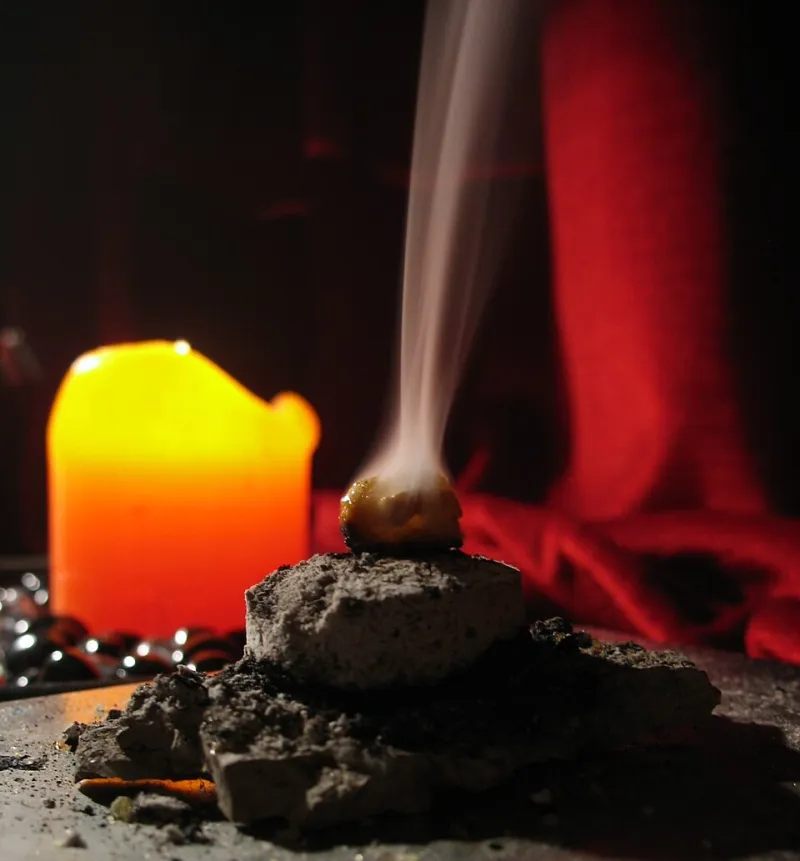
Photo: The camera was lent to me by my dear little brother, thanks. :), CC BY-SA 3.0, via Wikimedia Commons
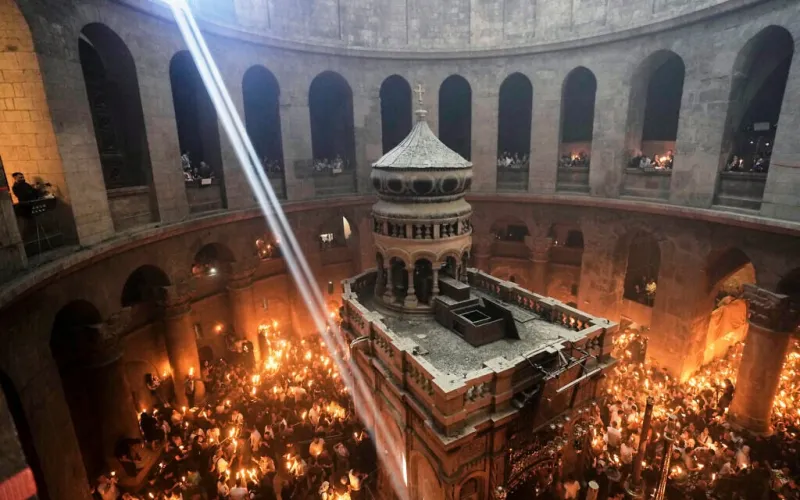
Long before a pilgrim sees the candlelit interior of the Church of the Holy Sepulchre, they smell it. Frankincense curls through stone corridors worn smooth by two millennia of reverent footsteps. Myrrh rises from altars tended by Greek Orthodox, Armenian Apostolic, Roman Catholic, Coptic, Ethiopian, and Syriac clergy, each community burning its own sacred blends according to rites that have scarcely changed in centuries. Beeswax candles breathe warmth into cold marble. Together, these aromas compose something that no photograph, documentary, or virtual tour can replicate: the living olfactory signature of Christianity's most sacred site.
For thousands of American pilgrims who make the journey to Jerusalem each year, that first breath inside the church is frequently described not as pleasant or unpleasant, but as overwhelming—in the most reverent sense of the word. It is a moment that many report thinking about for months, even years, afterward.
A Tradition Rooted in Scripture and Antiquity
The use of aromatic substances in worship at this site does not begin with the church's construction. It begins, theologically and historically, with the events the church was built to commemorate. The Gospel of John records that Nicodemus brought a mixture of myrrh and aloes—approximately seventy-five pounds of it—to prepare the body of Jesus for burial. The Magi, in the Gospel of Matthew, presented frankincense as one of three gifts to the newborn Christ. These were not incidental details. In the ancient Near East, aromatic resins carried profound religious and cultural weight: they purified sacred spaces, honored the divine, and marked the boundary between ordinary life and holy encounter.
When the Emperor Constantine commissioned the original basilica over the site of the crucifixion and tomb in the fourth century, liturgical incense was already a well-established feature of Christian worship. Egeria, a Spanish pilgrim who traveled to Jerusalem around 381 CE and left one of the earliest surviving accounts of Christian pilgrimage, described the church filled with the smoke of incense during the great ceremonies of Holy Week. What she witnessed then is, in its essential character, still visible—and breathable—today.
Frankincense, derived from the resin of Boswellia trees native to the Arabian Peninsula and the Horn of Africa, has been traded across the ancient world for more than five thousand years. Myrrh, extracted from the Commiphora tree, was so valuable in antiquity that it was used as currency. Both resins appear in the Hebrew scriptures as components of the sacred incense burned in the Jerusalem Temple. Their continued presence in the Church of the Holy Sepulchre is, among many things, an act of living continuity—a sensory thread connecting modern worshippers to the earliest recorded expressions of Abrahamic faith.
The Neuroscience of Sacred Smell
There is a scientific reason why scent, more than any other sense, tends to produce the most vivid and emotionally charged memories. The olfactory nerve connects directly to the limbic system—the brain's center for emotion and memory—bypassing the thalamus, which processes all other sensory information. This anatomical shortcut means that smells can trigger emotional responses before conscious thought intervenes. A scent does not ask for interpretation; it simply arrives.
Researchers studying what is sometimes called "olfactory-evoked autobiographical memory" have found that smell-triggered recollections tend to be older, more emotionally intense, and more unexpected than memories cued by visual or auditory stimuli. For pilgrims entering the Church of the Holy Sepulchre, this neurological reality has profound implications. The incense they encounter is not merely decorative atmosphere. It is, in the most literal biological sense, a direct line into memory, emotion, and felt experience.
Dr. Rachel Herz, a neuroscientist at Brown University and one of the leading researchers in olfactory psychology, has written extensively about the way scent functions as "the sense of emotion and memory." Her work helps explain what pilgrims often struggle to articulate: why standing at the Edicule—the small shrine built over the tomb of Christ—and breathing that particular combination of incense, wax, and ancient stone produces feelings that seem to bypass ordinary emotional categories entirely.
What American Pilgrims Report
Ask American pilgrims to describe their first moments inside the Church of the Holy Sepulchre, and the answers are strikingly consistent in their emphasis on smell.
Margaret, a retired schoolteacher from Nashville, Tennessee, who visited Jerusalem as part of a church group pilgrimage, described the experience this way: "I had read about the church for forty years. I thought I knew what to expect. But the moment I walked through that entrance and the incense hit me, I started crying. I couldn't explain it then, and I'm not sure I can fully explain it now. It was like something in me recognized the place before my mind had a chance to process it."
David, a pastor from suburban Chicago who has led three separate pilgrimages to the Holy Land, observed that the olfactory dimension of the church is something he now specifically prepares his congregants for. "I tell them: your nose is going to do something your eyes can't. The incense in that building has been burning, in some form, for over sixteen hundred years. There's a continuity in that smell that you can feel in your chest."
These testimonies reflect something broader than individual emotional response. They point to the way liturgical scent functions as what scholars of religion sometimes call a mnemonic anchor—a sensory cue that connects the present moment to a vast, accumulated history of worship. When a pilgrim from Ohio inhales frankincense inside the Church of the Holy Sepulchre, they are, in a very real sense, breathing the same air that Byzantine emperors, Crusader knights, Ottoman-era pilgrims, and nineteenth-century American travelers once breathed in that same space.
The Living Liturgical Practice
Each of the six Christian communities that share custodianship of the Church of the Holy Sepulchre maintains its own distinct liturgical traditions, and their use of incense reflects those differences. Greek Orthodox priests swing ornate censers during the Divine Liturgy, filling the rotunda with dense clouds of resinous smoke. Armenian clergy use a blend of incense noted for its particularly sweet, almost floral character. The Franciscan friars of the Roman Catholic custody burn incense according to Latin rite traditions that trace their own lineage back through medieval Europe to the early church.
The result is a layered olfactory environment that shifts depending on the hour, the liturgical calendar, and which community is celebrating at a given altar. A visitor who arrives during a Greek Orthodox ceremony will experience something perceptibly different from one who enters during a Franciscan Mass—not only visually and aurally, but through the most primal of the senses.
This complexity is, in its way, a microcosm of the church itself: multiple traditions, multiple histories, multiple expressions of devotion, coexisting within a single sacred space and producing something that none of them could generate alone.
Carrying the Memory Home
Many pilgrims return from Jerusalem with small bottles of holy myrrh oil or frankincense resin purchased from vendors near the church's entrance. These are not souvenirs in any trivial sense. They are olfactory keys—objects that, when opened months or years later in a living room in Atlanta or a church in Portland, can instantly reconstruct the felt experience of standing at the holiest site in Christendom.
This is the deepest function of sacred scent: not merely to beautify worship in the moment, but to extend it across time and distance. The fragrance of the Church of the Holy Sepulchre does not stay in Jerusalem. It travels home in memory, in small glass vials, and in the sensory vocabulary of faith that pilgrims carry with them long after the journey ends.
For a site dedicated to the mystery of resurrection—to the conviction that what appears finished is not finished at all—there may be no more fitting reminder than a scent that refuses to be left behind.