Standing at Golgotha: How Sacred Ground Is Redefining Faith for American Christians
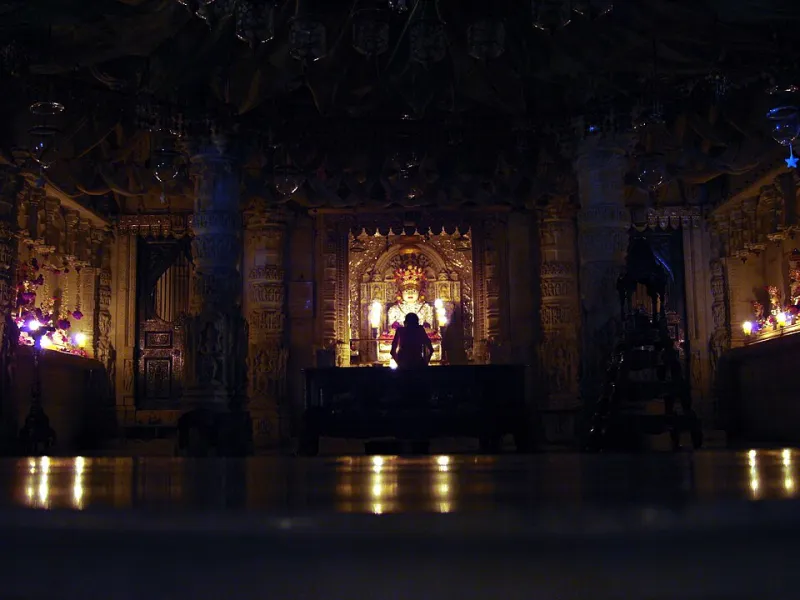
Photo: Jorge Láscar from Australia, CC BY 2.0, via Wikimedia Commons
For generations, American Christians have spoken of "walking in faith" as a metaphor. But for a growing number of pilgrims who have stood at Golgotha—the hill where tradition holds that Jesus was crucified—that phrase has taken on an unexpectedly literal and transformative meaning. Theologians, pastors, and ordinary believers are now asking whether physical proximity to sacred geography carries a spiritual weight that no sermon or scripture study can fully replicate.
The phenomenon has quietly gathered momentum over the past decade, and those who study it have begun calling it, informally, the Golgotha Effect.
More Than a Metaphor
American Christianity, particularly in its evangelical and mainline Protestant expressions, has long emphasized the interior life—the personal relationship with God, the private prayer, the individual conscience. Church buildings in suburban Ohio or rural Georgia may be cherished, but they are rarely understood as intrinsically sacred in the way that a first-century site in Jerusalem might be. The faith, in many American traditions, travels with the believer rather than residing in the stone.
That assumption, however, is being quietly interrogated by pilgrims returning from the Church of the Holy Sepulchre.
"I had read the Passion narrative probably five hundred times," said one pastor from Nashville who visited Jerusalem last spring. "But when I placed my hand on the rock of Golgotha—the actual limestone formation enshrined beneath the church—something shifted that I cannot fully articulate. The story stopped being a story. It became a place."
This shift from narrative to geography is precisely what theologians are beginning to examine with renewed seriousness.
The Theology of Place
Dr. Marianne Holloway, a professor of systematic theology at a seminary in the American Midwest, has spent three years interviewing pilgrims who have visited the Church of the Holy Sepulchre. Her research suggests that the encounter with Golgotha specifically—as opposed to other sacred sites in Jerusalem—tends to provoke what she describes as a "re-embodiment of faith."
"American Christianity has, in many quarters, become quite abstract," she explains. "We talk about grace, redemption, and suffering in theoretical terms. Golgotha refuses abstraction. You are standing at the precise location—or as close to it as history and archaeology can bring us—where Christians believe the most consequential act of human suffering occurred. The body of that belief suddenly has an address."
This re-embodiment does not merely produce emotional responses, though those are common. Pilgrims frequently report that their return from Jerusalem coincides with a reconsideration of how they practice faith in their daily lives. Some describe a heightened attentiveness to the physical dimensions of worship—the weight of bread in the hand at communion, the temperature of baptismal water. Others speak of a renewed engagement with the concept of suffering, no longer as an abstraction to be explained away but as a theological reality to be inhabited.
Suffering Reconsidered
Perhaps the most striking dimension of the Golgotha Effect is its impact on how American Christians relate to suffering—both their own and that of others.
In a cultural context that tends to frame pain as a problem to be solved and hardship as an obstacle to be overcome, the site of the Crucifixion presents a countercultural proposition. Suffering, at Golgotha, is not incidental to the story. It is the story.
"I came back from Jerusalem and I looked at my congregation differently," said one Episcopal priest from the Pacific Northwest. "I had members going through cancer treatment, through divorce, through grief. Before my pilgrimage, I think I was unconsciously trying to help them get past their suffering. After standing at Golgotha, I found myself wanting to stand inside it with them instead."
Church leaders across denominations echo this sentiment. The physical encounter with the site of the Passion appears, for many, to recalibrate the pastoral imagination—shifting the emphasis from resolution to accompaniment, from explanation to presence.
Authenticity and the American Spiritual Seeker
The Golgotha Effect also speaks to a broader cultural hunger among American Christians for what might be called spiritual authenticity. In an era of curated online experiences and consumer-driven church culture, the raw, ancient, and unpolished reality of the Church of the Holy Sepulchre offers something genuinely difficult to manufacture.
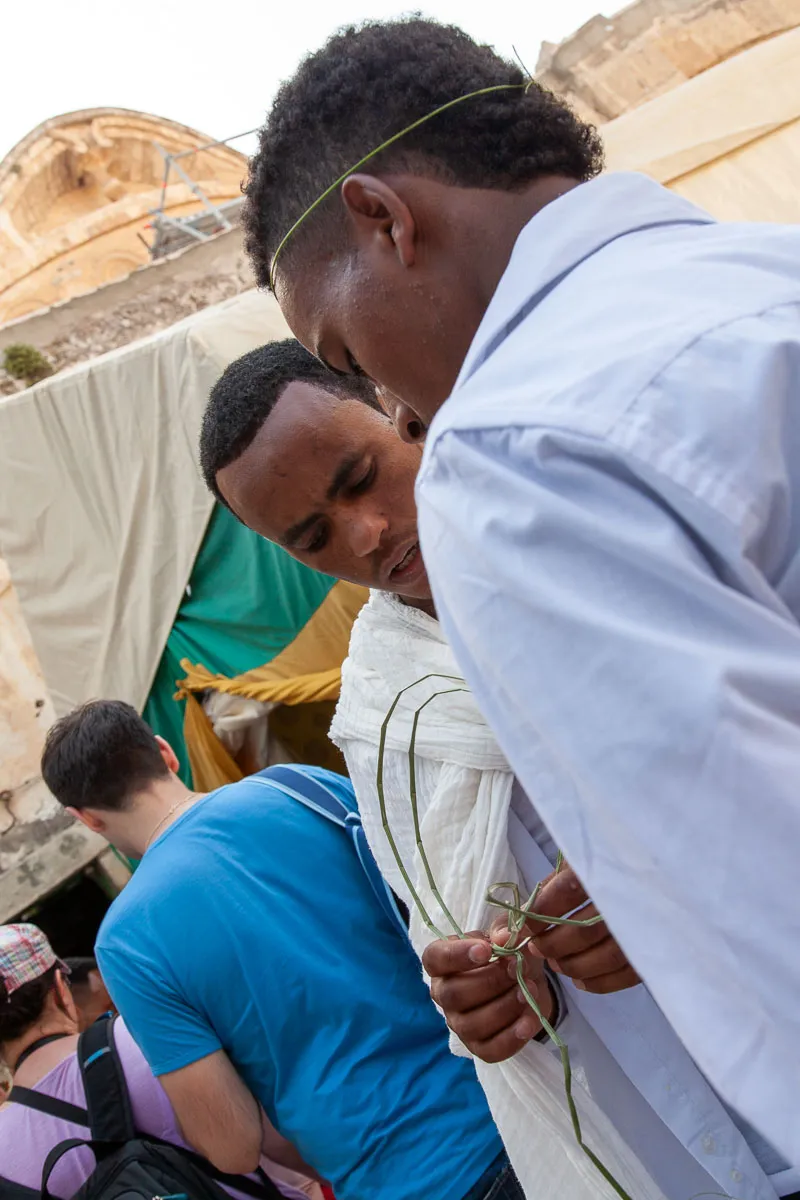
The church itself is not a pristine monument. It is a layered, contested, and at times disorienting space shared by six Christian denominations, marked by centuries of renovation and restoration, and perpetually crowded with pilgrims from every corner of the world. It does not flatter the visitor. It challenges them.
"I expected reverence and I found chaos," admitted one pilgrim from Atlanta. "And then, somehow, I found reverence inside the chaos. I think that's the most honest description of faith I've ever encountered."
For theologians like Dr. Holloway, this quality of honest complexity is itself theologically significant. "Golgotha was not a beautiful place," she observes. "It was a site of public execution, shame, and grief. The fact that the church built over it is complicated, contested, and imperfect may actually be its most authentic feature."
Carrying Jerusalem Home
The question that inevitably follows a pilgrimage is: what do you do with it? How does an encounter with Golgotha translate into a life lived in Minneapolis or Charlotte or Phoenix?
For many returning pilgrims, the answer involves a deliberate slowing down of spiritual practice—a move away from the efficient and programmatic toward the contemplative and embodied. Some report returning to liturgical traditions they had previously abandoned. Others describe a new commitment to physical acts of service, as if the body, once engaged in sacred geography, insists on remaining engaged.
Church leaders who have accompanied pilgrimage groups to Jerusalem increasingly report that the experience functions as a kind of theological reset—one that cannot be replicated by any curriculum, conference, or digital resource, however well-designed.
The Church of the Holy Sepulchre does not offer comfort in any conventional sense. It offers encounter. And for a growing number of American Christians, that encounter at Golgotha is proving to be the most consequential journey of their faith lives—not because it answers their questions, but because it teaches them, at last, to ask better ones.