The Broom, the Ladder, and the Schedule: Five Lessons in Conflict Resolution From Christianity's Most Contested Building
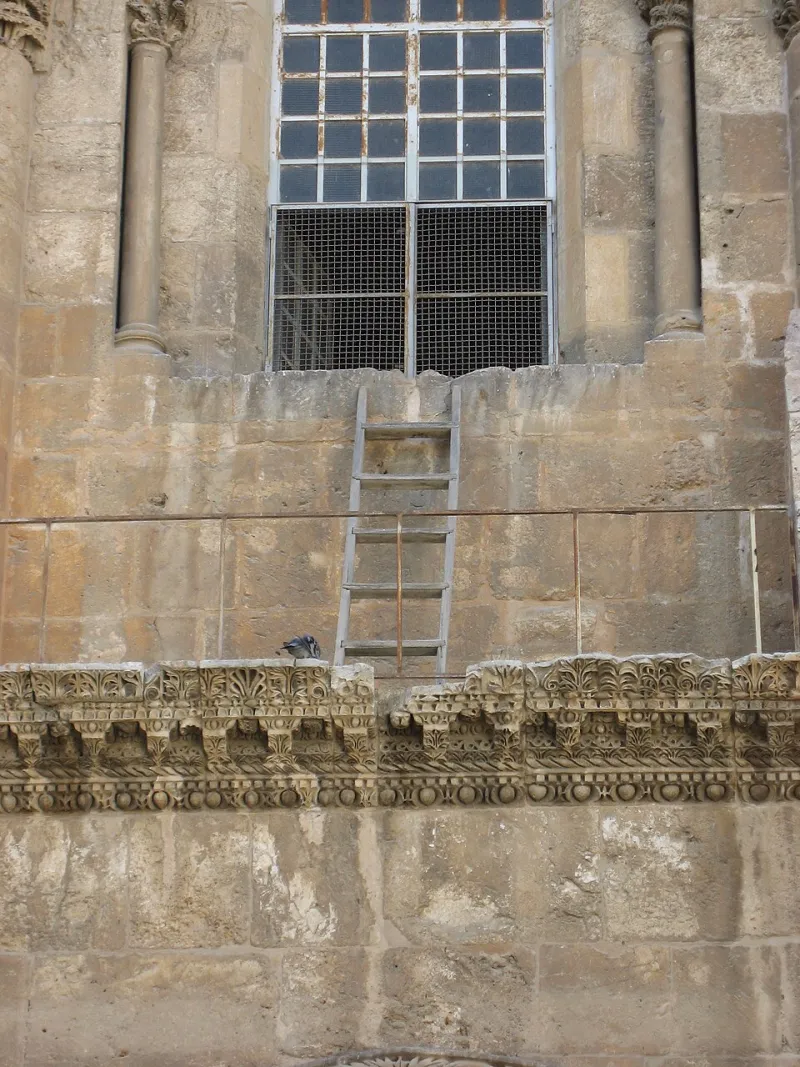
Photo: Meron Shaban, CC BY-SA 3.0, via Wikimedia Commons
Inside the Church of the Holy Sepulchre in Jerusalem, there is a wooden ladder resting on a ledge above the entrance. No one is certain when it was placed there. No one is permitted to move it. It has been photographed in the same position since at least 1757, and it has become the building's most famous symbol — proof, depending on who you ask, of absurd stubbornness or diplomatic genius.
Having spent considerable time studying the church's governance, we would argue for the second reading. The arrangements governing Christianity's holiest site — collectively known as the Status Quo — are frequently mocked as a stalemate. Look closer, and they are one of the longest-running conflict-management systems in human history. Here are five lessons it offers, no Jerusalem pilgrimage required.
1. Freeze the Assets, Share the Use
Under the Status Quo, formalized in 1852 but rooted in Ottoman firman of 1757, every candlestick, lamp, wall, and square inch of floor belongs to a specific community — and nothing can be changed. Not a single nail. The result is that no party can gain advantage through renovation, and none can lose territory through attrition.
The modern translation: in an intractable dispute, stop fighting over the thing itself and freeze it. Divorce courts, estate settlements, and corporate dissolutions all eventually discover what the six communities of the Holy Sepulchre learned centuries ago — that a frozen pie, however ugly, is a pie everyone keeps a slice of. A renegotiated pie is a pie someone loses.
2. Rotate the Rights, Down to the Day
The rights to celebrate in the church are scheduled with bureaucratic precision. The Armenian, Greek Orthodox, Roman Catholic, and other communities hold specific hours in specific chapels. On Good Friday, the procession order is fixed by ancient right. Nothing is left to goodwill, because goodwill, the drafters understood, is a depleting resource.
Any parent managing alternating weekends, or any firm running a shared calendar across time zones, recognizes the principle: rotation removes the negotiation. You do not argue about whose turn it is. You consult the schedule. The emotional energy that would go into renegotiating goes instead into simply showing up.
3. One Broom for Everyone
In one of the church's most quoted customs, the sweeping of the courtyard is done by a Palestinian Muslim family — the Joudehs and Nuseibehs, hereditary custodians since the days of Saladin — who also hold the keys to the building. And the broom used to sweep the common areas is shared, because the ground itself belongs to no single community.
The lesson is about neutral third parties. Some tasks are too contested to assign to any insider. Handing them to a trusted outsider — a mediator, an escrow agent, a mutually respected neighbor — is not a sign of weakness. It is often the only arrangement that survives.
4. Protect the Symbolic Ladder
The immovable ladder matters precisely because it is trivial. Moving it would cost nothing material and everything symbolically. The communities leave it in place because removing it would signal that one party could unilaterally alter the shared space — and the entire system rests on the assurance that no one can.
In everyday conflict, identify your ladders: the small symbolic acts that would be cheap to do and expensive to survive. The passive-aggressive email. The name removed from the sign. The chair pulled from the shared conference room. Wise institutions learn to leave the ladder alone.
5. Discomfort Is the Price of Peace
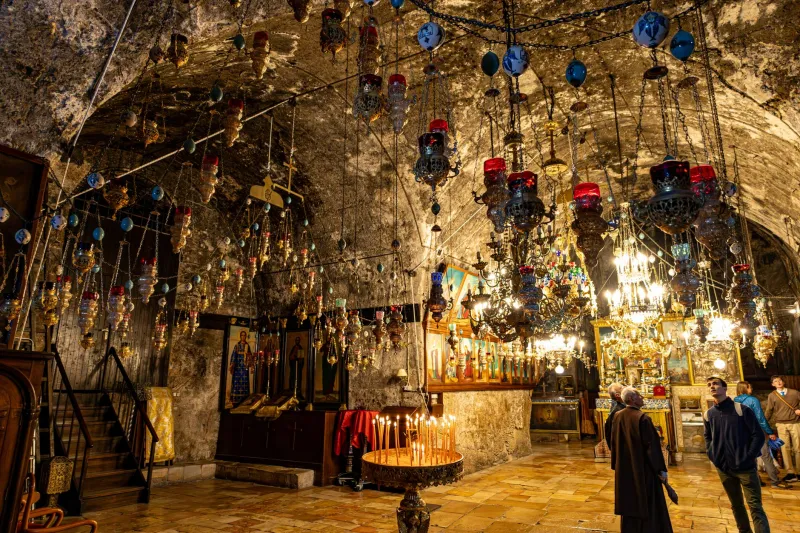
Visitors often find the Holy Sepulchre's interior chaotic — overlapping services, competing chants, monks glaring across the rotunda. This is what compromise actually looks like when it is working. It is not harmony. It is managed friction that never quite ignites.
American culture, in offices and churches alike, tends to mistake conflict resolution for the elimination of tension. The Holy Sepulchre suggests a humbler goal: not silence, but a volume everyone can live with, sustained for centuries.
The ladder is still there. The keys still change hands at dawn each day. And the building stands — the oldest continuously functioning shared institution in the Christian world.