Two Thousand Years Without Silence: The Unbroken Thread of Prayer at the Church of the Holy Sepulchre
There are buildings that have survived history. And then there is the Church of the Holy Sepulchre — a place that has not merely survived history but has continued, without interruption, to sanctify it.
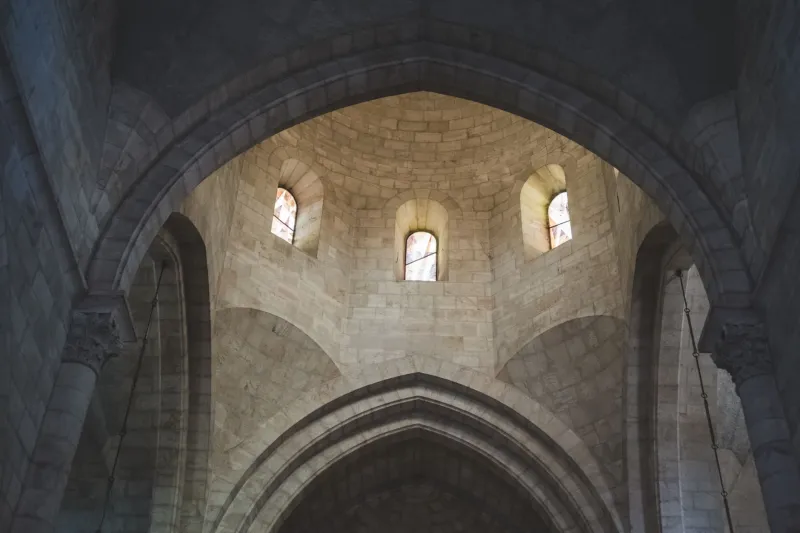
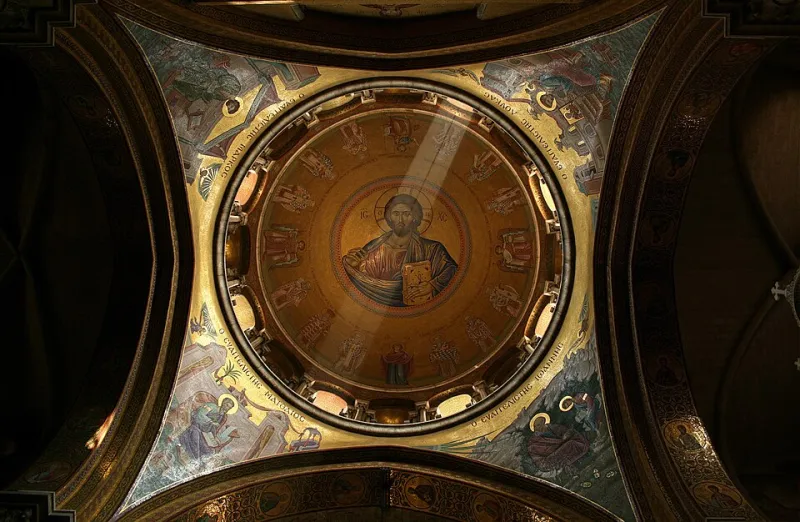
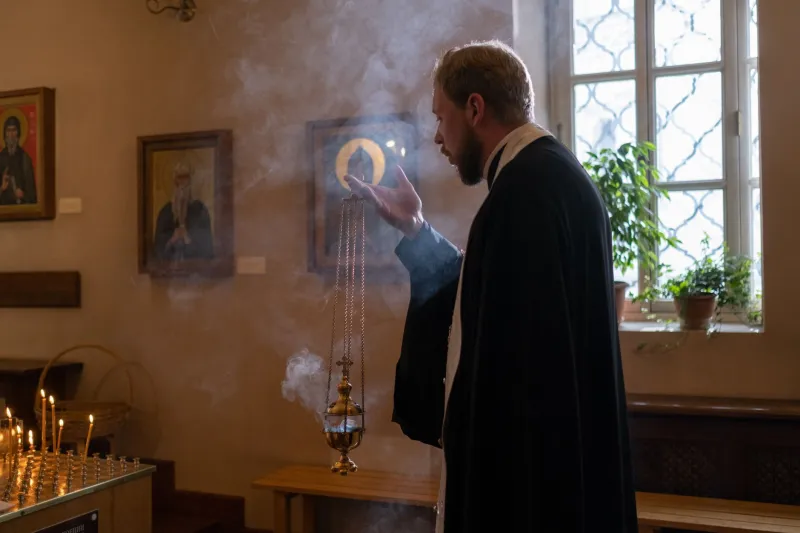
Every morning, before the sun has fully risen over the Old City of Jerusalem, clergy from multiple Christian traditions gather beneath the basilica's ancient dome to fulfill an obligation that stretches back nearly two thousand years. The incense rises. The chants begin. And a chain of worship that has never — not once, not for a single day — been broken, extends itself by one more link.
For American Christians accustomed to congregations that form and dissolve within a generation, this continuity can be genuinely difficult to comprehend. Yet it is perhaps the most theologically significant feature of the Church of the Holy Sepulchre: not merely that it marks the site of the Crucifixion and Resurrection, but that it has never stopped bearing witness to those events through living, embodied prayer.
A Tradition Older Than Most Nations
The earliest Christian communities in Jerusalem understood almost immediately that the sites associated with Christ's death and resurrection required ongoing veneration. Archaeological and historical records suggest that small gatherings of Jewish Christians maintained a presence on or near Golgotha from the earliest decades of the faith, even as the Roman Empire sought to suppress the movement.
When the Emperor Constantine commissioned the construction of the first basilica on this site in the fourth century, he was not creating a new tradition — he was giving architectural form to one that already existed. The Constantinian church, consecrated in 335 CE, institutionalized what local Christians had been doing informally for generations: praying continuously at the place where they believed God had entered human history most decisively.
What followed was not a smooth, untroubled liturgical continuity. The Persian invasion of 614 CE brought devastation and temporary displacement. The Arab conquest of 637 CE transformed the political landscape of Jerusalem entirely. The Crusader period reshaped the church's architecture and its custodianship in ways still visible today. Earthquakes, fires, and the slow erosion of centuries have each tested the structure's physical integrity.
And yet the prayers continued.
What Continuity Actually Looks Like
To speak of unbroken worship is not to romanticize an effortless transmission. The clergy who have maintained these liturgies across the centuries did so under conditions that would test the resolve of any spiritual community. During periods of occupation, clergy sometimes required permission from foreign authorities simply to enter their own church. During the Crusader occupation, Eastern Christian clergy were at various points excluded from portions of the building they had tended for generations. The earthquake of 1927 left significant structural damage that took decades to fully address.
The Status Quo arrangement — the complex, centuries-old agreement governing which Christian denomination controls which section of the church — emerged precisely because the desire to maintain continuous worship was so fierce among so many traditions that conflict became nearly inevitable without formal boundaries. Six distinct Christian communities: Greek Orthodox, Roman Catholic, Armenian Apostolic, Coptic, Ethiopian, and Syriac Orthodox, each maintain their own liturgical schedules within the same walls.
The result is something that has no real parallel in American religious life: a single sacred space in which multiple ancient traditions simultaneously sustain their own unbroken threads of daily worship, each representing a distinct lineage of Christian prayer that extends back through the centuries.
The Weight of Continuity on Contemporary Clergy
For the priests and monks who serve at the Church of the Holy Sepulchre today, the awareness of this inheritance is not abstract. It is a daily reality that shapes how they understand their vocation.
Greek Orthodox clergy, who hold primary custodianship over the Katholikon — the central section of the church — maintain a liturgical schedule rooted in Byzantine tradition that has changed remarkably little over a millennium. Franciscan friars, who represent the Roman Catholic presence and have served continuously at the site since the fourteenth century, celebrate Mass at the Chapel of the Apparition each morning with a consciousness that their predecessors have done precisely the same thing for seven centuries.
To serve at this site, by all accounts, is to feel the accumulated weight of that history in a way that transforms ordinary religious duty into something approaching sacred obligation. The daily office is not merely a spiritual practice; it is an act of historical maintenance, a refusal to allow the thread to break.
What This Means for American Pilgrims
For the tens of thousands of American Christians who make the journey to Jerusalem each year, the Church of the Holy Sepulchre offers an experience that is difficult to find anywhere else in the world: the sensation of stepping into a living tradition rather than a preserved monument.
Many American churches are relatively young institutions. Even the oldest Protestant congregations in the United States date back only a few centuries; the oldest Catholic parishes perhaps a little further. The rhythms of American religious life — shaped by revivals, denominations, cultural shifts, and the perpetual reinvention that characterizes so much of American society — can leave believers with a hunger for something more deeply rooted.
The Church of the Holy Sepulchre answers that hunger in a way that no museum exhibit or documentary film can replicate. When an American pilgrim attends an early morning liturgy beneath the Rotunda, they are not observing a reconstruction of ancient worship. They are participating in it. The chants being sung have been sung in this place, without interruption, for longer than the United States has existed as a concept.
This is not merely an interesting historical fact. For many pilgrims, it is a profoundly disorienting and ultimately transformative realization: that their own faith, however personal and individually shaped it may feel, is connected to something vastly larger than themselves — a community of prayer that spans not just geography but time.
The Miracle in Plain Sight
Theologians sometimes speak of miracles as events that rupture the ordinary fabric of cause and effect. By that definition, what has occurred at the Church of the Holy Sepulchre is not a miracle at all. There was no single dramatic intervention that preserved the tradition. There were only ordinary human beings — priests, monks, deacons, and laypeople — who chose, generation after generation, to show up and pray.
And yet the cumulative effect of those ordinary choices, sustained across invasions and earthquakes and political upheavals and the slow attrition of centuries, constitutes something that is difficult to describe in any terms other than miraculous. The continuity itself is the wonder.
For American Christians seeking to understand what it means to belong to a faith tradition rather than simply to hold personal religious beliefs, the Church of the Holy Sepulchre offers a singular lesson. Traditions do not preserve themselves. They are preserved by people who refuse, day after day, to let them die.
The morning prayers will be offered tomorrow, as they were offered today, as they have been offered for nearly two thousand years. The chain will not be broken. And every pilgrim who travels to Jerusalem to witness this continuity carries something of it home — a small awareness that they, too, are links in something that began long before them and will continue long after.