Dawn Mass and Dusk Processions: The Ordinary Miracle of Six Churches Sharing One Roof

Photo: SwarmCheng, CC BY-SA 4.0, via Wikimedia Commons
Ask almost anyone what they know about the Church of the Holy Sepulchre, and you will likely hear about the ladder. The immovable ladder, perched on a ledge since the eighteenth century, has become shorthand in the American imagination for religious pettiness—six denominations so committed to their prerogatives that they cannot even move a piece of wood.
It is a good story. It is also, I have come to believe, fundamentally the wrong story.
A Day in the Life of a Contested Sanctuary
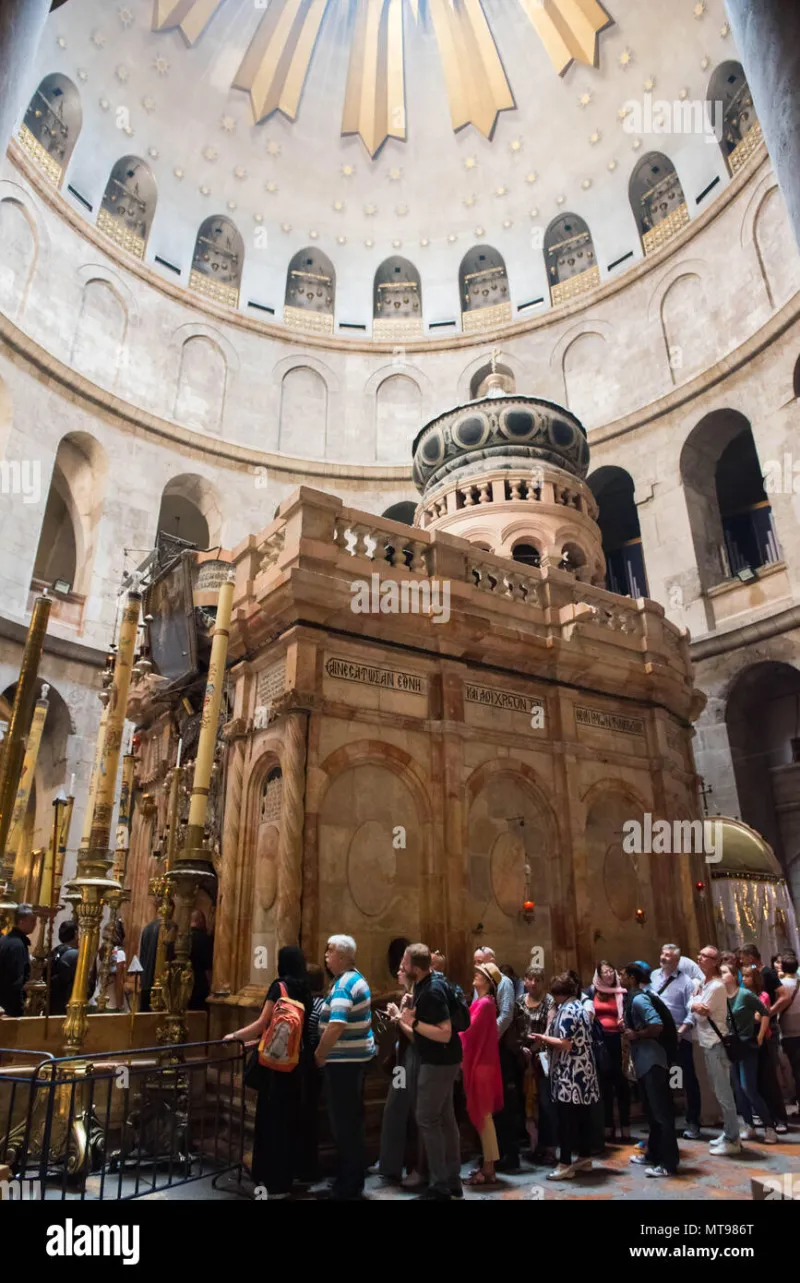
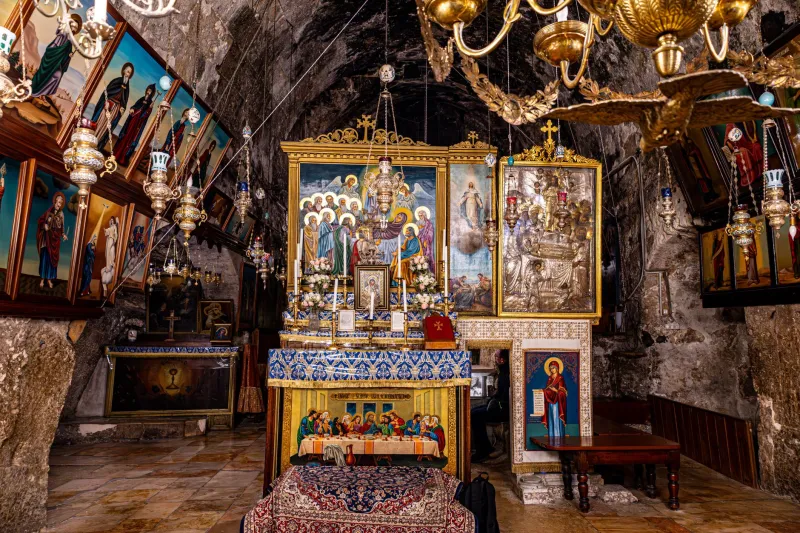
Consider what actually happens inside that building over twenty-four hours. Before sunrise, the Coptic community celebrates its liturgy in the Chapel of the Angel, its ancient tongue filling the space beneath the rotunda. As morning comes, the Greek Orthodox begin their offices around the tomb, their chant layering over the tail end of Armenian prayers. At midday, the Armenian community censes its chapels; the air of the church has carried that same sweet smoke for centuries. In the late afternoon, the Franciscans process through the aisles in their brown habits, singing in Latin as they have since the seventeenth century. Ethiopian monks keep their vigil on the rooftop, the only community whose claim to the church is literally above all others.
Yes, there are frictions. Boundaries are disputed, processions are timed to avoid one another, and occasional altercations make the international news. But zoom out, and the picture changes. Six communities, some of whose parent churches have not spoken to each other in fifteen centuries, conduct their worship in the same building, every single day, without a single denomination surrendering its identity to make it possible.
What the Ladder Actually Teaches
The Status Quo that governs the church is routinely described as a stalemate. But consider what a stalemate is: two sides too evenly matched to destroy each other, forced to live together. That is not a failure of diplomacy. It is diplomacy's oldest and hardest achievement.
The ladder stays on the ledge because moving it would advantage one community over another. Annoying? Certainly. But compare it with the alternative history of Christian holy sites—the Crusades, the schisms, the burned churches—and the ladder begins to look less like pettiness and more like a monument to restraint. It is a truce made visible.
A Mirror for a Divided Country
Americans watching our own civic life fracture along religious, political, and cultural lines might find in Jerusalem's holiest church an uncomfortable and useful mirror. We tend to assume that coexistence requires agreement, or at least warm feeling. The Holy Sepulchre suggests otherwise. The communities inside it do not agree on theology, authority, or even the calendar. Several of them do not recognize each other's orders or sacraments. And yet they share a roof, a door, and the most sacred ground in their tradition—not because they resolved their differences, but because they built a structure sturdy enough to hold the differences.
That, it seems to me, is the lesson worth carrying home. The American experiment has always asked something similar of us: not that we love our neighbors' convictions, but that we refuse to burn down the building we share. The six churches of the Holy Sepulchre have kept that refusal alive for nearly three hundred years, through empires, wars, and a pandemic. Their coexistence is grudging, negotiated, and sometimes loud. It is also, day after ordinary day, real.
The pilgrims who come to Jerusalem expecting dysfunction and finding dawn mass, noon incense, and dusk processions often describe the experience as a kind of conversion. Perhaps that is the church's quietest miracle: not that its rivals love one another, but that they have chosen, every morning for centuries, to unlock the same door.