Echoes of the Anastasis: What Pilgrims Hear When Six Liturgies Pray at Once
Visitors to the Church of the Holy Sepulchre usually describe what they saw: the Edicule, the Stone of Anointing, the crowds, the candles. What they often forget is what they heard. The church is not a silent museum. It is a dense acoustic environment in which several liturgical traditions pray at the same time, each with its own language, tempo, and sense of space.
For American pilgrims accustomed to worship spaces with a single sound source, the effect can be disorienting. It can also be revelatory.
A Building That Refuses Silence
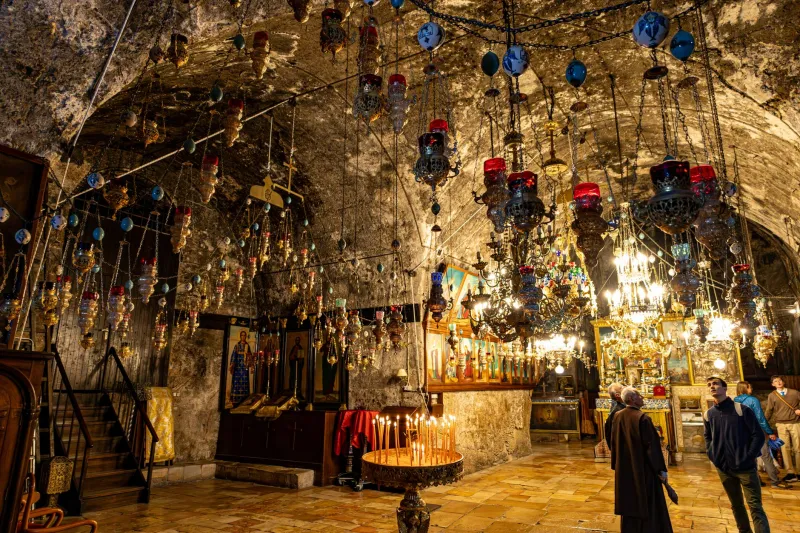
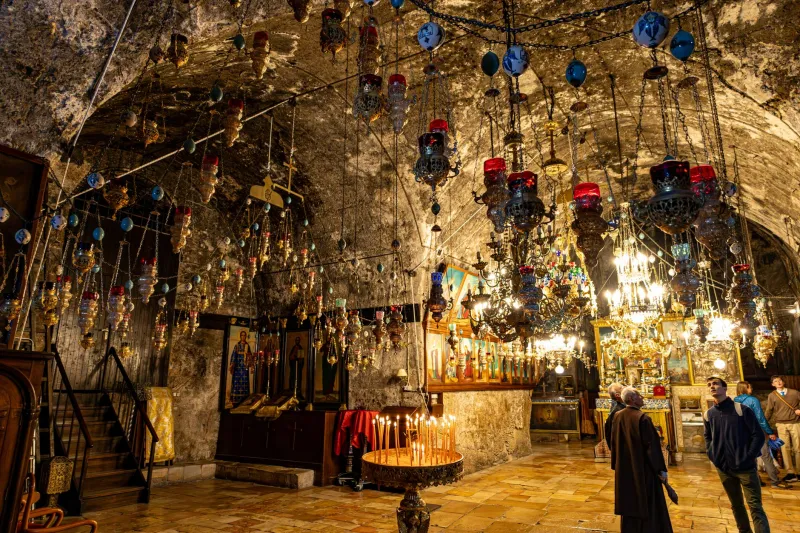
The Church of the Holy Sepulchre has never been organized around a single congregation. Different communities hold different spaces and different hours under arrangements shaped by centuries of custom. The result is not a unified soundscape but a layered one. A chant from one chapel may drift into another. A bell may interrupt a reading. A procession may pass through a space where another group is praying.
This is not chaos in the ordinary sense. It is a complex order that has developed over time. Yet it refuses the polished silence that many American visitors associate with sacred space. The church sounds like what it is: a shared building with multiple claimants, multiple calendars, and multiple ways of praying.
The Acoustic Map of the Rotunda
The architecture shapes the sound as much as the liturgy does. The Rotunda opens under a dome that carries voices upward and outward. Stone floors and marble surfaces reflect sound. The Edicule at the center becomes a focal point not only for sight but for hearing. A prayer offered near the entrance can be heard in fragments near the tomb, and a chant from a side chapel can arrive at the wrong moment or the right one.
Pilgrims often notice that the church seems louder than expected. Part of that is crowd noise. Part of it is the building itself, which does not absorb sound so much as redistribute it. The acoustics do not create a single worship experience. They create a field of overlapping experiences.
Bells, Chant, and the Clash of Calendars
The liturgical calendars of the communities do not always align. Western and Eastern dates for feasts differ. Daily offices begin at different hours. The result is that a visitor may hear Greek Orthodox chant, Armenian hymnody, Franciscan prayer, and the bells of several communities within the same hour.
For some pilgrims, this is a distraction. For others, it becomes an image of the church's long history. The sound is not a sign that something has gone wrong. It is a sign that many traditions have learned to inhabit the same building without agreeing on every detail. The clash of calendars is part of the acoustic texture of the Holy Sepulchre.
Why American Ears Notice the Difference
American worship spaces are often designed for clarity. Sound systems amplify the preacher. Acousticians shape the room. Congregations expect a controlled auditory environment, whether in a megachurch auditorium or a quiet mainline sanctuary. The Holy Sepulchre offers no such control. There is no single audio mix, no master schedule of silence, and no guarantee that the most important words will be the easiest to hear.
That can frustrate visitors who are used to curated worship. It can also free them. When the sound is not perfectly managed, the pilgrim must listen differently. He must accept that some words will be lost, some prayers will overlap, and some moments will be understood only in retrospect.
The Ministry of Sudden Silence
Yet the church is not only noise. There are moments when the sound falls away. A pause between processions. A gap in the schedule. A hush near the tomb. These silences are not engineered for dramatic effect. They arrive as part of the daily rhythm, and that makes them more powerful.
American pilgrims often speak of a sudden silence as the moment they remember most. It may come after a long period of chant, or in the middle of a crowded afternoon. The silence does not resolve the church's tensions or answer every question. It simply creates room. In a building that refuses silence, the occasional quiet becomes a form of hospitality.
The sound of the tomb is therefore not a single sound. It is chant and bell, crowd and echo, prayer and interruption. For pilgrims willing to listen without demanding a perfect acoustic, the Church of the Holy Sepulchre offers a lesson in sacred noise: that worship can be faithful even when it is shared, layered, and unfinished.