Absolution at the Altar of the World: How American Catholics Are Encountering Confession Inside the Church of the Holy Sepulchre
There is a moment, known to many who have made the pilgrimage to Jerusalem, when the abstract becomes achingly concrete. For American Catholics, that moment often arrives not at the entrance of the Church of the Holy Sepulchre, nor even at the first sight of the Edicule — the ornate shrine encasing the tomb of Christ — but rather in the quiet, candlelit stillness of a confession chapel, where the ancient sacrament of reconciliation is offered within what may be the most historically saturated building in the world.
To kneel and confess one's sins in a space that stands, by centuries of tradition and substantial archaeological evidence, upon the very ground of Calvary and the empty tomb is to experience a theological convergence that no amount of catechism can fully prepare a person for.
A Sacrament in Sacred Geography
The Church of the Holy Sepulchre, administered jointly by six Christian denominations under the terms of the historic Status Quo agreement, contains several spaces where the Roman Catholic sacrament of reconciliation is regularly offered. The Franciscan Friars of the Custody of the Holy Land, who have maintained a continuous Catholic presence in Jerusalem since the thirteenth century, oversee a number of these chapels and coordinate scheduled confession times for pilgrims.
Among the most significant is the Chapel of the Apparition, located in the Latin, or Roman Catholic, section of the church. Tradition holds that this was the site where the risen Christ first appeared to the Virgin Mary following the Resurrection — a claim not recorded in the canonical Gospels but preserved in devotional history and deeply meaningful to Catholic pilgrims. It is here, in a chapel already saturated with Marian significance, that many American visitors receive the sacrament of penance.
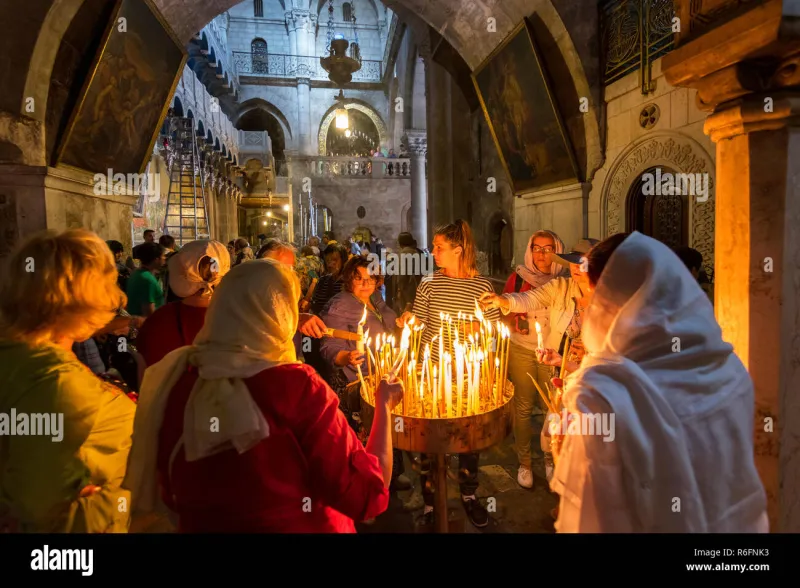
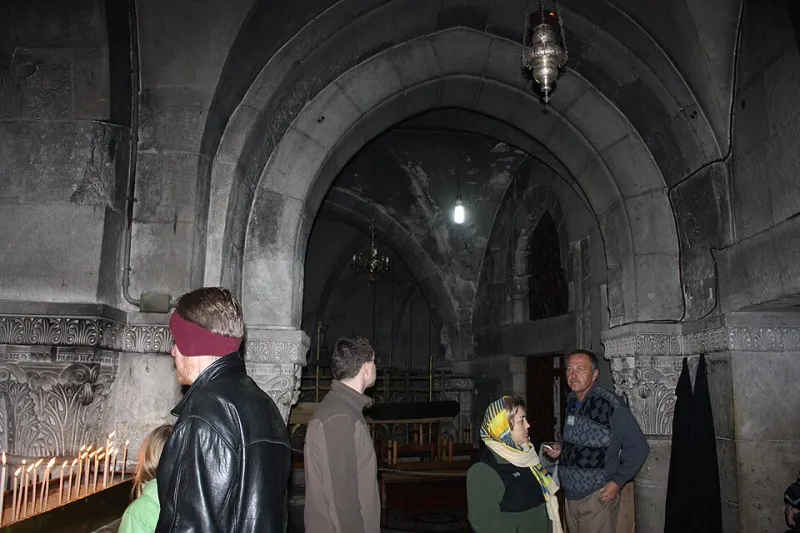
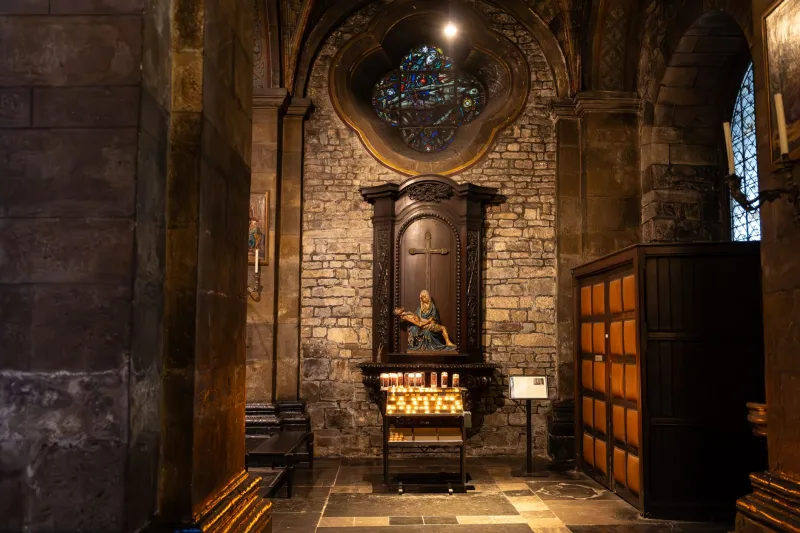
The physical environment of these spaces is not incidental to the spiritual experience. Low vaulted ceilings, the persistent scent of incense, the flicker of oil lamps, and the ambient murmur of prayers in a dozen languages combine to create an atmosphere that is simultaneously intimate and immense. American pilgrims accustomed to the carpeted reconciliation rooms of suburban parishes frequently describe a kind of sensory and spiritual disorientation — not an unpleasant one, but a disorientation nonetheless.
What American Pilgrims Say
Kathleen, a sixty-three-year-old retired schoolteacher from Cincinnati, Ohio, described her experience of confession at the Church of the Holy Sepulchre as the most significant moment of a forty-year Catholic life. "I had been to confession hundreds of times," she said. "I knew the words. I knew what was supposed to happen. But when I sat in that chapel and realized where I was — that I was maybe two hundred feet from where He died — something broke open in me that I didn't know needed breaking."
Her account is far from unusual among American Catholic pilgrims. Spiritual directors and pilgrimage leaders who regularly accompany groups from the United States to Jerusalem report that the reconciliation chapels within the Church of the Holy Sepulchre consistently produce experiences of unusual depth and emotional intensity. Many participants describe the sacrament, received in this context, as a kind of second conversion — a moment when the forgiveness they had accepted intellectually for decades suddenly acquired a visceral, geographical reality.
Father Michael, a diocesan priest from the Archdiocese of Chicago who has led pilgrimages to Jerusalem for more than a decade, frames the phenomenon in theological terms. "The sacraments have always been about making the invisible visible, the spiritual tangible," he explained. "But when you receive absolution in a building that stands on the site of the Passion and the Resurrection, the sacramental logic becomes almost overwhelming. You are not just remembering what Christ did for you. You are, in some sense, standing in the place where He did it."
The Architecture of Penitence
The spatial arrangement of the Church of the Holy Sepulchre itself contributes to the particular character of confession within its walls. Unlike a parish church, where the reconciliation room is typically a peripheral space — tucked behind the sacristy or off a side corridor — the confession chapels here exist in close proximity to the central mysteries of Christian faith.
The Chapel of the Apparition, for instance, is separated from Calvary by only a short walk through the nave. The Edicule, encasing the tomb, is visible from many points within the building. For a penitent Catholic, this proximity is not merely symbolic. The theological connection between Christ's atoning death and the sacrament of reconciliation — a connection that Catholic teaching has always affirmed — becomes, in this environment, almost spatially demonstrable.
Architectural historians note that the current structure, which incorporates elements from the original fourth-century Constantinian basilica, the Crusader-era reconstruction, and subsequent Ottoman and modern renovations, was never designed with the specific pastoral needs of twenty-first-century American pilgrims in mind. And yet, the layered complexity of the building — its chapels within chapels, its corridors that open unexpectedly onto ancient stones — seems to mirror the layered complexity of the interior life that the sacrament of reconciliation addresses.
Theology Tested by Place
For some American Catholics, the experience of confession at the Church of the Holy Sepulchre prompts a renewed engagement with questions they had long considered settled. What does it mean that forgiveness was purchased at a specific location, at a specific moment in history? How does proximity to that location — even across two thousand years — alter one's relationship to the forgiveness itself?
These are not new questions. Christian theologians have wrestled with the relationship between sacred geography and sacramental grace since the earliest centuries of the faith. But they acquire a particular urgency for Americans, who tend to approach religion with a pragmatic, experiential sensibility. When the experience itself becomes undeniable — when the tears arrive unbidden in a stone chapel in Jerusalem — the theological questions that follow are no longer merely academic.
Sister Patricia, a member of a religious congregation based in Boston who has accompanied multiple pilgrimage groups to the Holy Land, observes that the reconciliation chapels at the Church of the Holy Sepulchre function, for many American Catholics, as a kind of spiritual corrective. "We live in a culture that has largely lost its sense of sacred place," she said. "We worship in spaces that are beautiful, sometimes, but rarely ancient, rarely weighted with history. Jerusalem reminds us that our faith is not an idea. It happened somewhere. It happened here."
Coming Home Differently
Pilgrims who have received the sacrament of reconciliation at the Church of the Holy Sepulchre frequently report that the experience alters their relationship to confession long after they have returned to the United States. The reconciliation room of a suburban parish, once perhaps approached with routine familiarity or mild reluctance, is revisited with something closer to reverence.
This, perhaps, is the most lasting gift of the reconciliation chapels in Jerusalem's holiest church — not the singular intensity of a once-in-a-lifetime experience, but the permanent recalibration of a sacramental imagination. To have confessed one's sins in the shadow of Calvary is to carry Calvary home, in some small but indelible way, to every confession that follows.
For American Catholics making the pilgrimage to the Church of the Holy Sepulchre, the ancient sacrament and the ancient stone have a way of interpreting each other. And in that mutual interpretation, something that has always been true about forgiveness becomes, at last, impossible to forget.