Empty Tomb, Open Questions: The Enduring Scholarly Debate Over What Happened at the Resurrection
A Site That Refuses to Stay Silent
For most Americans, the Resurrection is a matter of faith — something affirmed on Easter Sunday, sung about in hymns, and held privately in the heart. Yet for a growing community of scientists, archaeologists, historians, and theologians, it is also a subject of rigorous, sometimes contentious scholarly inquiry. And nowhere does that inquiry feel more urgent than inside the Church of the Holy Sepulchre in Jerusalem, where the traditional site of Christ's burial and reported rising draws millions of visitors each year.
The question at the center of this debate is deceptively simple: What, precisely, happened inside that tomb?
The answers — or the refusals to answer — reveal as much about the limits of human knowledge as they do about the event itself.
What the Historical Record Does and Does Not Confirm
Historians approaching the Resurrection must first confront a fundamental challenge: the event, if it occurred, lies outside the ordinary boundaries of documented human experience. That said, several surrounding facts enjoy broad scholarly consensus.
Most mainstream historians — including many who hold no personal religious commitments — acknowledge that Jesus of Nazareth was a real historical figure who was crucified under the Roman prefect Pontius Pilate, almost certainly between 30 and 33 CE. They further acknowledge that within a very short period after his death, his followers began claiming, with remarkable conviction and at considerable personal risk, that he had risen from the dead.
What historians dispute is the interpretation of those claims. Bart Ehrman, one of America's most prominent New Testament scholars and a self-described agnostic, has written extensively on the subject. He accepts that the disciples genuinely believed they had encountered a risen Jesus, but argues that historians, by the nature of their discipline, cannot adjudicate whether a miracle occurred. "Historians can only establish what probably happened," Ehrman has noted, "and miracles, by definition, are the least probable of occurrences."
N.T. Wright, the British New Testament scholar and former Bishop of Durham whose work is widely read in American seminaries, reaches a starkly different conclusion from much of the same evidence. Wright argues that the emergence of Resurrection belief within the earliest Jewish-Christian communities is historically inexplicable without an actual bodily rising. The specific nature of the claim — not a spiritual vision, not a resuscitation, but a transformed physical body — was, he contends, precisely the kind of assertion that first-century Jews would not have invented to describe a deceased teacher they admired.
The Medical and Scientific Lens
Beyond historical debate, medical professionals have long attempted to examine the physical dimensions of the Crucifixion and its immediate aftermath. These investigations, while they cannot directly address the Resurrection itself, bear on questions of death, burial, and the conditions of the tomb.
Forensic pathologists have studied the Crucifixion extensively. The medical consensus holds that death by crucifixion was nearly certain given the recorded circumstances: flogging, blood loss, the physiological stress of suspension, and the Roman soldiers' professional confirmation of death as reported in the Gospel of John. The so-called "swoon theory" — the hypothesis that Jesus survived the Crucifixion in a weakened state and later revived — has been largely dismissed by the medical community on these grounds, even by skeptical scholars who reject the Resurrection on other bases.
The tomb itself has become a subject of direct scientific analysis. In 2016 and 2017, a team from the National Technical University of Athens conducted the first modern restoration of the Edicule — the shrine enclosing the burial chamber — within the Church of the Holy Sepulchre. During that process, researchers briefly exposed the original limestone burial bed for the first time in centuries. Researchers confirmed that the original rock surface does exist beneath the marble cladding, consistent with first-century burial practices in the region. The findings were significant not because they proved or disproved the Resurrection, but because they confirmed the site's authenticity as a genuine first-century tomb of the type described in the Gospel accounts.
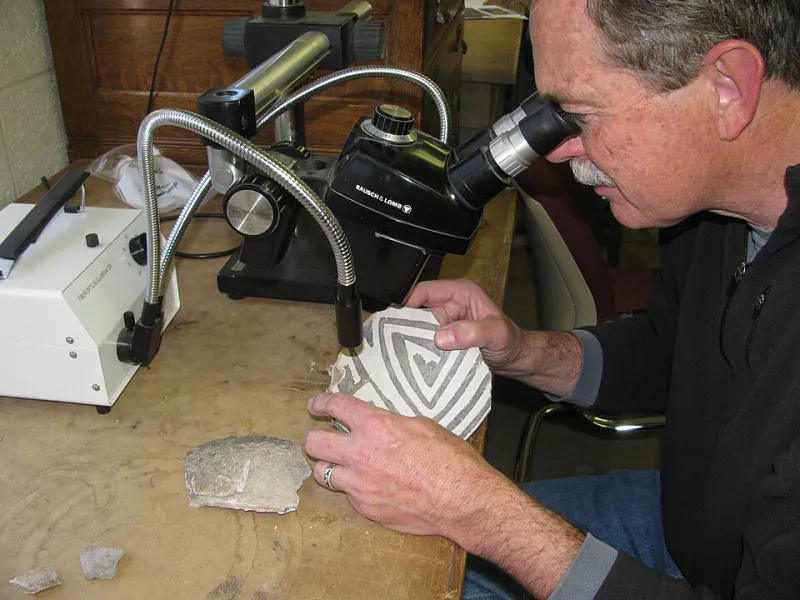
Anthropic Laboratories and various materials science teams have also examined the Shroud of Turin, a separate but related artifact that some believe to be the burial cloth of Jesus. The shroud remains one of the most studied objects in the world, with competing analyses producing contradictory conclusions about its age and origin. It stands as a fitting emblem of the broader debate: sophisticated modern tools applied to ancient evidence, yielding no consensus.
Why the Church of the Holy Sepulchre Matters to This Conversation
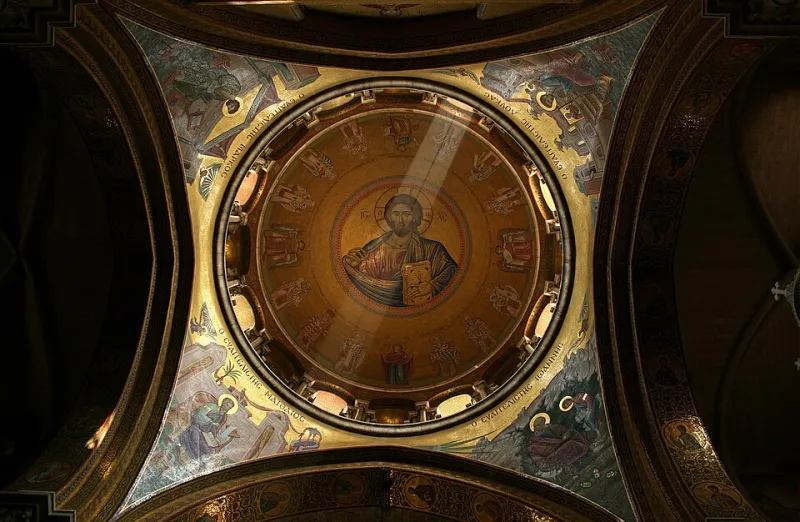
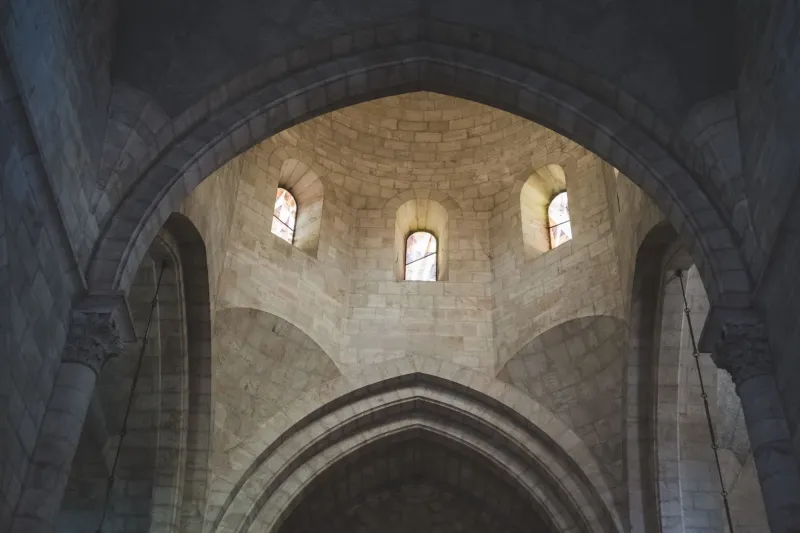
The Church of the Holy Sepulchre is not merely a backdrop to these scholarly disputes — it is their most tangible address. The site's identification as the location of Golgotha and the nearby tomb of Jesus dates to the fourth century, when the Emperor Constantine commissioned a basilica over what local Christian communities had long venerated as sacred ground. Archaeological excavations over the past several decades have consistently supported the historical plausibility of this identification, revealing first-century tombs, a former quarry, and evidence of pre-Constantinian veneration beneath the existing structure.
For American pilgrims who visit, this physical reality can be jarring in the best possible sense. Standing within the Edicule, bending to touch the stone where tradition says a body once lay, many visitors report that the abstract theological question suddenly becomes intensely personal. The debate between scholars — conducted in journal articles, university lectures, and public forums across the United States — takes on a different weight when you are standing at the place the debate is about.
Neither Proof nor Dismissal
What is perhaps most striking about the current state of Resurrection scholarship is the degree to which serious thinkers on all sides resist easy conclusions. Skeptical historians generally do not claim to have disproved the Resurrection; they claim only that it falls outside the scope of historical verification. Believing theologians do not typically ask science to confirm what they hold by faith; they ask only that the empirical record be read honestly and without prejudice.
In that shared intellectual humility, something important may reside. The Church of the Holy Sepulchre has stood for seventeen centuries as a place where certainty is not required — where doubt and devotion have always coexisted within the same walls, often within the same visitor.
The tomb, as the Gospel accounts themselves note, was found empty. What that emptiness means remains, for now, the most consequential open question in human history. Science has illuminated the edges of the story. Faith has always lived at its center. And the conversation between them, conducted honestly and with mutual respect, may be one of the most important ongoing dialogues of our time.
For those who wish to engage that dialogue not merely as an intellectual exercise but as a living encounter, Jerusalem — and the Church of the Holy Sepulchre — remains the most compelling place on earth to begin.