The Oldest Co-Founding Dispute in History: Why the Holy Sepulchre Is a Masterclass in Institutional Survival
Photo: Lewis Hulbert, CC BY-SA 3.0, via Wikimedia Commons
Every founder dreams of building something that lasts. The average lifespan of a company in the S&P 500 has fallen from around sixty years in the 1960s to under twenty today. Family businesses rarely see a third generation. Even nations, as the twentieth century demonstrated, can be startup ventures with brutal failure rates.
Now consider a different kind of organization: one with six competing stakeholder groups, no CEO, no bylaws anyone fully agrees on, a headquarters building that cannot legally be repaired without triggering an international incident — and an unbroken operating history of roughly seventeen centuries at its site, with governance documents older than the United States by several decades.
The Church of the Holy Sepulchre in Jerusalem may be the most successful institution you have never thought about in organizational terms. And its strangest feature — a frozen power-sharing arrangement called the Status Quo — turns out to be less an anomaly than a preview of every partnership dispute in modern business.
The Cap Table From Hell
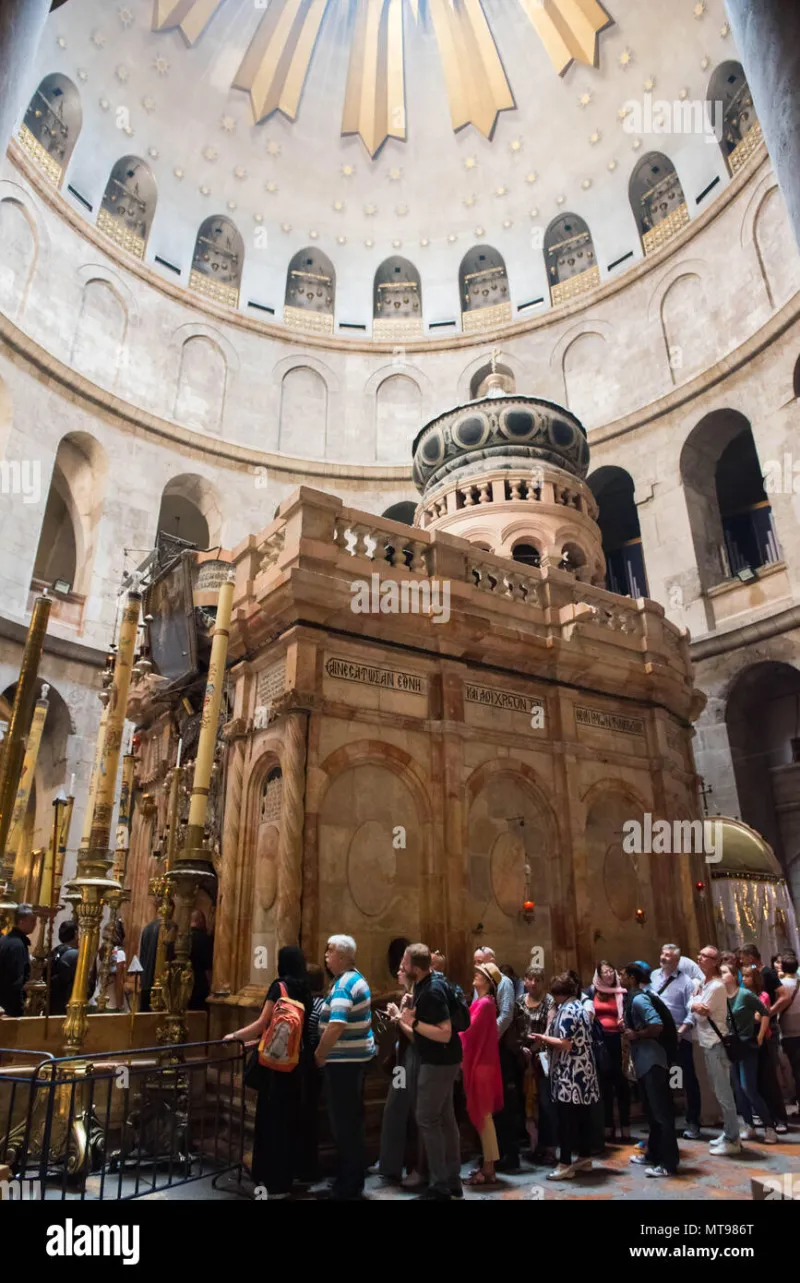
Picture the equity conversation. Six communities — Greek Orthodox, Roman Catholic, Armenian Apostolic, plus the smaller Coptic, Syriac, and Ethiopian Orthodox churches — hold defined rights over specific spaces, hours, and objects within one building. The Greeks hold the largest share, including the Katholikon. The Catholics hold the northern portion of the rotunda. The Armenians hold rights in the Chapel of Saint Helena. The Copts hold a small alcove abutting the tomb shrine — from which, in a detail business readers will savor, the Ethiopians were historically displaced to a rooftop monastery, where they remain to this day.
Any startup accelerator would flag this cap table as uninvestable. Too many founders. Unclear leadership. A rights allocation based on events in 1757.
And yet. The arrangement has survived the fall of the Ottoman Empire, two world wars, the partition of Jerusalem, and countless ownership changes of the land itself. The building functions daily. Compare that to the median five-year survival rate of American partnerships, and the Status Quo starts to look less like dysfunction and more like the most robust governance protocol ever deployed.
The Anti-Roadmap Strategy
The core mechanism is elegantly simple: no party may change anything without the consent of all others, and absent consent, nothing changes — including seemingly minor things like a chair, a candle, or a roof tile. When the Aedicule, the shrine over the tomb, was finally restored in 2016–2017, it required years of negotiation and a funding structure involving all major communities plus external stakeholders, including Jordan, which has custodial rights over the site.
Modern co-founder disputes usually die of the opposite impulse: the belief that the disagreement can be won. One partner pushes a reorg, the other litigates, and the company — the thing both claimed to serve — collapses in the middle. The Holy Sepulchre's founders, or rather their Ottoman-era lawyers, made the opposite bet. They bet that stalemate, formalized and ritualized, beats victory. Nobody wins; therefore nobody loses; therefore the enterprise continues.
Scheduling as Sovereignty
Remote-work consultants would also find familiar ground. The church runs on a strict time-share model: each community's liturgical hours in shared spaces are fixed by ancient right, down to the order of processions on Good Friday. There is no booking system, no calendar app, no 'quick sync' to resolve conflicts. The schedule is the constitution.
Distributed companies that survive — the ones that outlast their founders — tend to converge on something similar: explicit, inflexible agreements about shared resources, precisely because informal goodwill does not scale across distance, language, and time zones. The six communities of the Holy Sepulchre have been running a fully asynchronous, multi-stakeholder operation across languages, calendars, and jurisdictions since long before the printing press.
The Durable Compromise
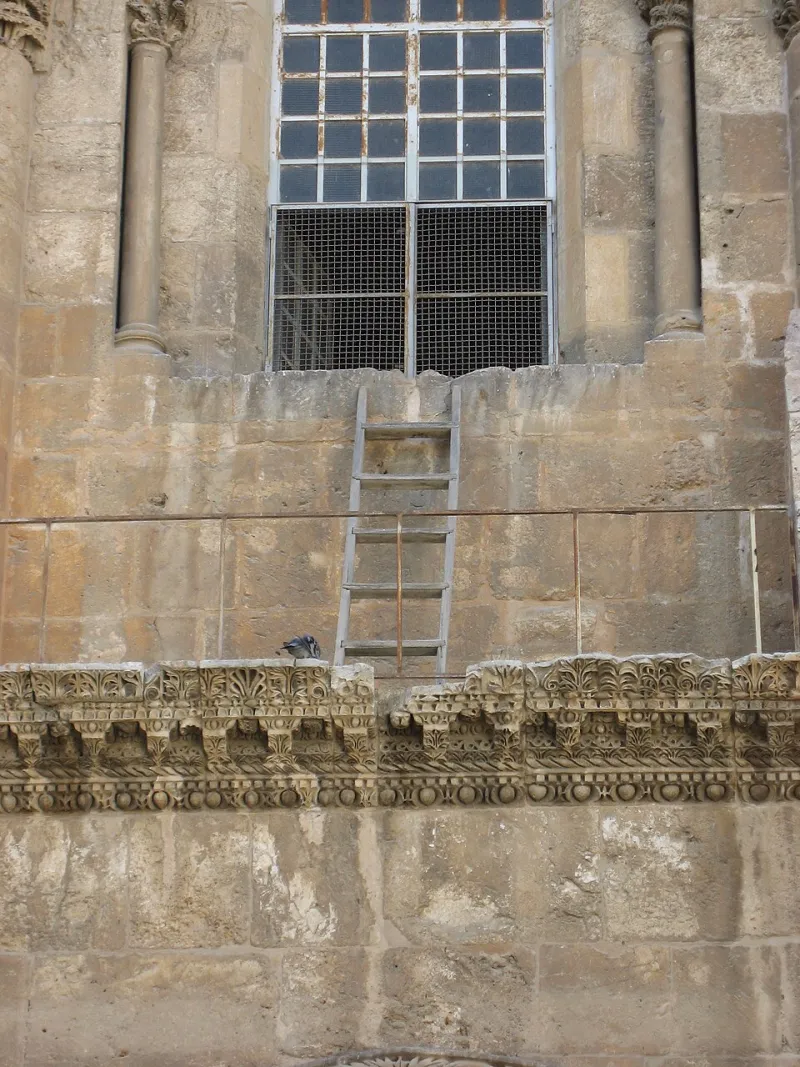
None of this is to romanticize the arrangement. The Status Quo has produced genuine suffering, exclusion, and absurdity — the displaced Ethiopians on the roof, the famous immovable ladder, maintenance deferred for decades. It is a system built by exhausted people to prevent worse outcomes, not an aspirational org chart.
But that is exactly the point for American readers enamored of longevity. Institutions that endure are rarely the most elegant. They are the ones whose stakeholders concluded, correctly, that the alternative to compromise was not victory but extinction. The Holy Sepulchre has outlasted every empire that governed it, every army that breached Jerusalem's walls, and every modern corporation that will appear in this year's Fortune 500.
It did so by refusing, for nearly three centuries, to move a single ladder.